
The Commons · Community Challenge
Atlas vote: which monument should we model first?
A community challenge: nominate a monument from our Monument Atlas for a respectful educational scale model, and learn what makes a nomination credible.
- Level
- Beginner
- Reading time
- 8 minutes
- Evidence
- community-brief
- Reviewed
- 2026-08-09
Jump through this guide
The short version
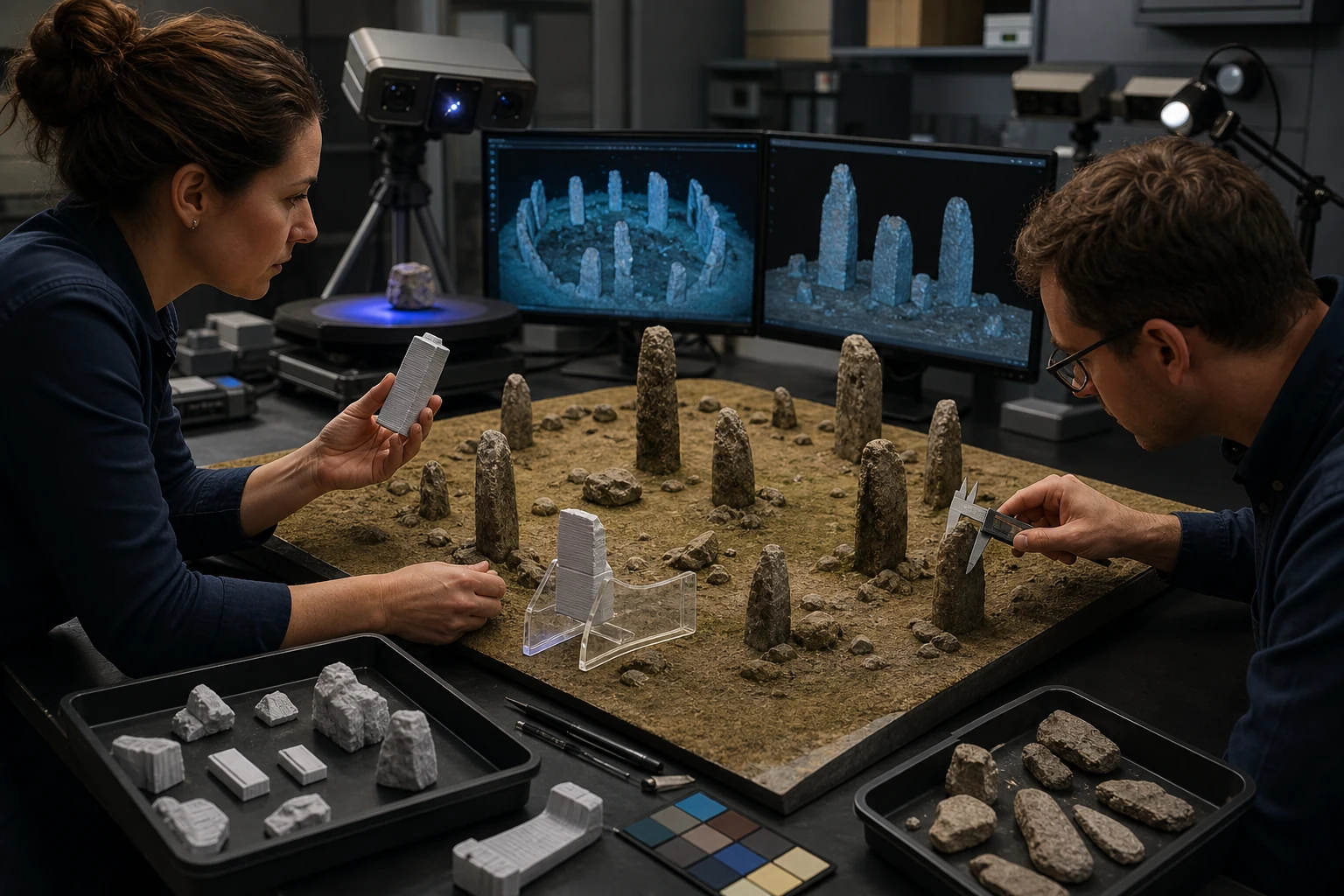
Our Monument Atlas series covers sites documented by their own evidence, from Stonehenge to Meroë. This challenge asks readers to nominate one for a small, respectful, clearly-labeled educational scale model: not a claim to authority over the original, and not a substitute for visiting or supporting the real site's stewards. A good nomination is itself an exercise in the atlas method, naming credible sources, an honest purpose, and a scale that keeps the model a teaching aid rather than a pretend original. International conservation doctrine treats reconstruction of missing or uncertain fabric as an exception requiring strong justification, a caution worth carrying into a model shop as much as a restoration site 1.
After reading, you can
- Write a monument nomination that names credible sources and an honest teaching purpose
- Apply the study-not-overwrite replica ethic to a personal scale-model project
- Distinguish a labeled educational model from a claim to reconstruct or represent a site authoritatively
01
Why this challenge
A scale model is a small, controllable way to think through a monument's documented geometry: its proportions, its phases, its structural logic. Building one forces the same discipline this atlas asks of every article, naming what is documented, what is interpreted, and what remains open, because a model that fudges the uncertain parts teaches the wrong lesson to whoever picks it up. Nominating a monument for that treatment is the first step, and it is a genuinely useful exercise on its own.
Conservation doctrine draws a firm line for real monuments: reconstruction of destroyed or missing fabric is treated as an exception requiring rigorous documentation, not a default choice, and international guidelines caution against filling gaps with conjecture 12. That same caution, scaled down, is the ethic this challenge asks makers to practice: model what the evidence supports, and say plainly where the evidence runs out.
02
The brief
Nominate one monument, from this atlas or from the wider record of documented world heritage, as a candidate for a future educational scale model, and make your own attempt at a small model of it if you would like to enter twice over. A nomination needs four things: the site's name and location, at least one credible source such as a World Heritage listing, a proposed teaching purpose, for example a tabletop demonstration of a structural idea or a phase comparison, and a short note on what is well documented about its form versus what would have to be interpreted or left uncertain.
Stonehenge is a useful worked example, since its World Heritage listing documents shaped sarsen structure, phased construction, and a solstitial axis clearly enough to model responsibly, while its bluestone transport route remains open 3. A nomination for a less-documented site should say so honestly, and propose a model that represents only what current evidence actually supports. A nomination for a well-documented site can be more ambitious in scope; a nomination for a thinner record should propose a simpler, more conservative model, and both are equally welcome here.
- Site name, location, and at least one credible source
- A stated teaching purpose, not just 'because it looks cool'
- What is documented enough to model with confidence
- What would need to be left uncertain or omitted
- Optional: your own attempt at a small model
03
Safety and rights boundaries
A nominated or built model is a teaching object, never a claim to be the real thing. Label any model clearly as a modern educational replica, keep it visibly distinguishable from photographs or descriptions of the original, and never present invented detail as documented fact. If your source is thin, say your model is speculative or partial rather than filling gaps confidently; that honesty is the whole point of the exercise, not an inconvenience to it.
Use only your own reference research, appropriately licensed images, or publicly available heritage-listing information, and credit your sources in your write-up. If you make and share a physical or digital model, standard making hazards apply, hot tools, dust, sharp edges, and resin curing and washing, so follow your process's documented safety procedures. Respect living cultures and descendant communities connected to any site you nominate; a monument belongs first to the people who steward it today.
04
How to participate
Post your nomination, and your model attempt if you have one, publicly on Instagram or X and tag @print.mason or @printmasons with the hashtag #PrintMasonChallenge, or email it to right.just.right@gmail.com. There are no on-site accounts, uploads, or comments for this challenge or any other. Participation is ongoing with no deadline, and we promise no prizes and no guaranteed features, only genuine interest in a well-argued nomination.
Keep the nomination itself short and legible: a sentence on the site, your source, your proposed teaching purpose, and your honesty check on what is documented versus uncertain. If several readers nominate the same site independently, that is useful signal, not a wasted entry; feel free to nominate a site others have already suggested and add your own reasoning. Multiple independent nominations for the same site help us gauge genuine reader interest, so do not hold back a good source or a sharper teaching purpose just because someone else got there first.
05
What a strong entry shows
A strong nomination cites a real, credible source rather than a vague memory of a documentary, states a specific teaching purpose rather than general enthusiasm, and is explicit about where the evidence gets thin. A strong accompanying model, if included, keeps its uncertain zones visibly simpler or differently finished than its well-documented zones, echoing the confidence-layer discipline this atlas practices throughout, and never claims to be, or to replace, the original monument 12.
The best entries read like a short atlas article in miniature: here is the site, here is what we actually know, here is why it is worth modeling, here is what we are choosing not to guess at. That is the same method as every guide in this series, applied by a reader instead of an editor, and it is exactly the kind of nomination that earns a monument its place in future work.
Working vocabulary
Glossary
- Nomination
- A reader-submitted proposal naming a monument, its sources, and a teaching purpose for a possible future scale model.
- Educational replica
- A model built to teach about a monument's documented form, clearly labeled and distinguishable from the original.
- Reconstruction (conservation sense)
- Recreating destroyed or missing fabric; treated by international doctrine as exceptional and requiring strong documentary justification.
- Confidence layer
- A visible distinction, in a model or its description, between documented, interpreted, and unknown or uncertain elements.
Source ledger
References and further study
Numbered citations point to the sources below. We favor standards, government laboratories, peer-reviewed research, and primary technical documentation. A link is evidence for the claim it supports—not an endorsement of every claim on that website. Read the full editorial and correction method.
- Policy Compendium — ReconstructionUNESCO World Heritage Centre · intergovernmental policy compendium↗Opens in a new tab
- International Charter for the Conservation and Restoration of Monuments and Sites (Venice Charter)ICOMOS · international heritage charter↗Opens in a new tab
- Stonehenge, Avebury and Associated Sites — World Heritage listingUNESCO World Heritage Centre · world heritage listing↗Opens in a new tab